A place is not a flavour guarantee
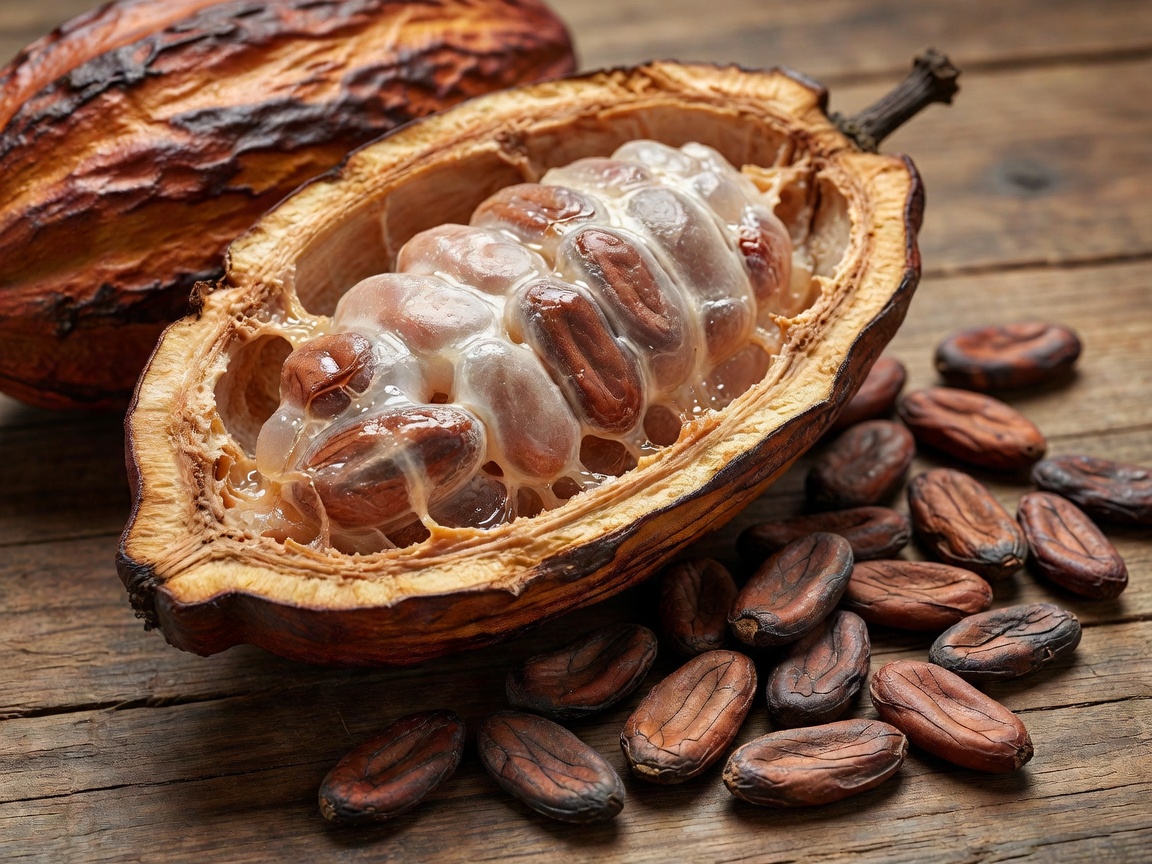
The cacao tree, Theobroma cacao, produces fruit containing the seeds used to make chocolate. A country name on a wrapper describes a broad geographical claim, not a standard recipe for aroma. Genetics, weather, farming practice, harvest selection and post-harvest decisions can vary within a country, a region and even a single supply network.
“Single origin” therefore needs a follow-up question: what does this producer mean by origin? It might be a country, a cooperative, an estate or another defined source. A smaller area can provide more specific context, but precision on a map does not automatically establish better flavour, fairer trade or complete traceability. Each of those claims needs its own evidence.
Fermentation changes the starting material
After pods are opened, the pulp-covered seeds are commonly fermented. Microorganisms act on the pulp, and changing conditions affect the seeds themselves. This stage contributes to the development of precursors that matter later during roasting. Fermentation is not a single universal schedule: equipment, quantity, turning practices, climate and the material being processed all influence the course of a batch.
A tasting note cannot reliably reconstruct those conditions on its own. Describing an aroma as fruity or fermented is an observation, not proof of a specific fermentation protocol. A well-documented collection keeps sensory records separate from processing facts supplied by a producer. Where there is no technical record, the responsible conclusion may simply be that the production detail is unknown.
Drying, storage and transport matter
Drying reduces moisture after fermentation and prepares cacao for storage and movement. The pace and conditions of drying can affect the material that reaches the maker. Exposure to smoke, unsuitable storage or other handling problems may also influence aroma. These stages are easy to overlook because they do not usually appear in the finished bar’s visual story, yet they are part of its production history.
Traceability should be read as a chain of records, not a romantic photograph. Ask whether information identifies a harvest, a lot, a supplier relationship or only a country. The International Cocoa Organization provides broader industry and cacao-sector context. Its material is useful for understanding the scale around an individual bar, though it cannot verify a specific maker’s claims for you.
Roasting is an interpretation
Makers use roasting to develop flavour and manage their process, with approaches varying according to equipment, cacao and intended result. Roasting, breaking and winnowing can be organised in different sequences; winnowing separates shell material from the nib. Those nibs are then ground, producing a fluid cacao mass as particle size decreases and cocoa butter is released.
Chocolate recipes introduce another set of choices. Sugar, added cocoa butter, milk ingredients, emulsifiers or flavourings may be included depending on the product. Cacao percentage usually includes both cocoa solids and cocoa butter derived from cacao. It does not tell you the exact balance between those components, and two bars with the same percentage can feel and taste markedly different.
Refining, conching and setting the structure
Refining reduces particle size, while conching involves working the chocolate under controlled conditions to influence its flavour and physical properties. In some small-scale equipment, functions overlap rather than occurring in sharply separated machines. Avoid assuming that longer processing is inherently better: a duration without equipment, recipe and process context is a weak basis for comparison.
Tempering manages cocoa butter crystallisation so that finished chocolate can set with the intended appearance, release and texture. Mould design, bar thickness and serving temperature then influence the eating experience. A sharp snap can be interesting evidence about a particular piece, but it is not a universal scoring shortcut across milk chocolate, dark chocolate and filled products.

Read the wrapper with useful scepticism
“Bean to bar” generally indicates involvement from cacao beans to finished chocolate, but the phrase alone does not establish a uniform standard of transparency. Look for specific explanations of sourcing and processing. Distinguish factual disclosures from adjectives such as “exceptional,” and remember that absence of detail is not evidence for either good or poor practice.
A productive next step is a comparison with one clear question. Taste related bars, retain their labels and write down which variables you actually know. Leave causal claims tentative. Learning to say “I notice a difference, but cannot yet explain it” is one of the most useful skills a chocolate library can teach.