Prepare a small, fair comparison
Choose a quiet setting without strong ambient smells. Let samples reach a suitable, similar tasting condition, following storage guidance rather than warming them aggressively. Use clean utensils and retain the original ingredient information. If allergies or dietary restrictions are relevant, confirm suitability before preparing any samples; appearance and cacao percentage cannot establish safety.
Begin with a few small portions rather than a crowded plate. Water and pauses can help, but no palate cleanser makes fatigue disappear. If you feel distracted, congested or tired, record that context. Your perception is part of the tasting conditions, not an inconvenience to hide. You can always return to the chocolate on another occasion.
Observe before you explain
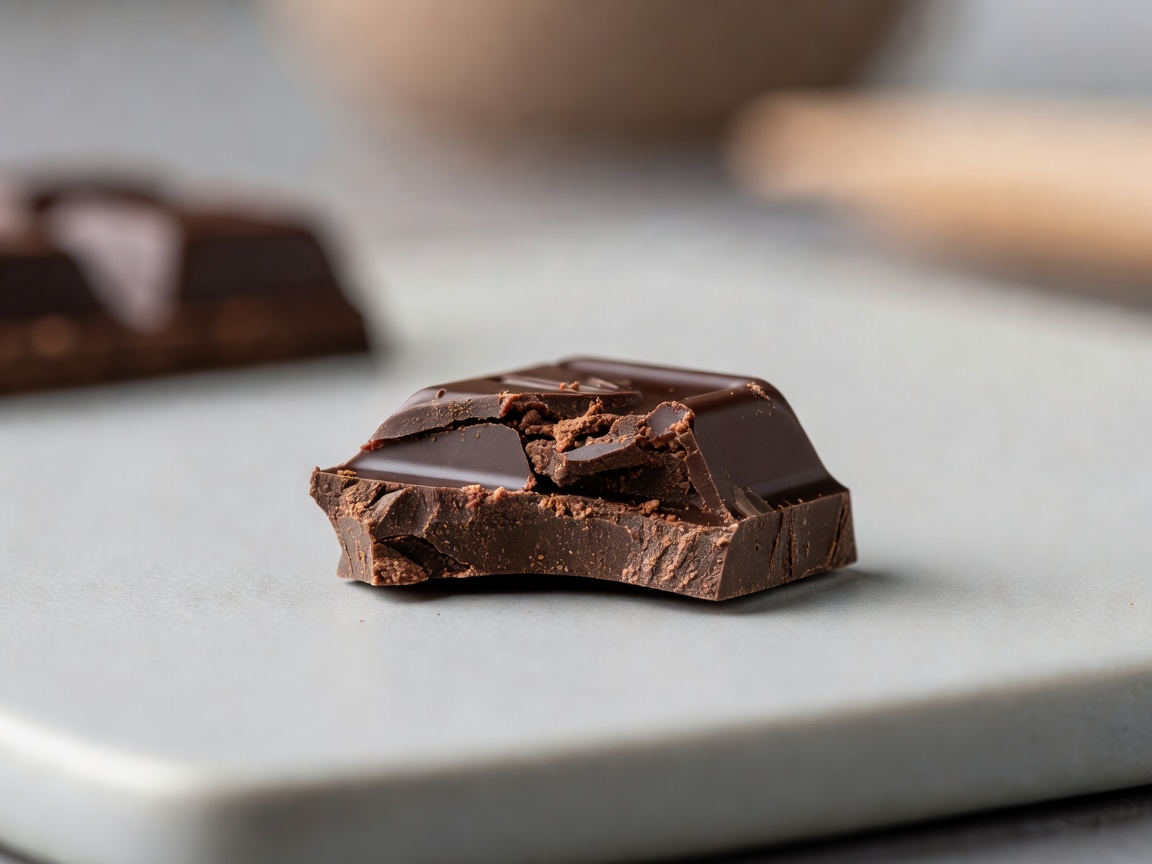
Look at the surface and the broken edge. Note colour, visible inclusions, thickness and any bloom without immediately converting those observations into a score. Colour can vary with ingredients and processing, and a photograph may distort it further. A pale film may affect presentation, but appearance alone cannot tell you whether an unfamiliar sample is suitable to eat. When in doubt, consult the maker and do not taste it.
Smell the sample gently, then take a small piece and allow it to soften. Chew if that helps you understand the texture; there is no need to perform a rigid ritual. Notice how sensations change over time. An aroma perceived while smelling the bar may differ from the aromas experienced as it melts in the mouth. Write a few words before discussing them with the group.
Separate the sensory channels
Everyday language bundles many experiences into “taste.” For clearer notes, distinguish basic tastes such as sweetness, sourness and bitterness from aromas such as roasted nut or dried fruit. Astringency—the drying, puckering sensation—belongs to mouthfeel rather than being another word for bitterness. Texture adds further information: melting rate, graininess, waxiness and smoothness are not interchangeable descriptions.
| Observation | Useful words | A follow-up question |
|---|---|---|
| Aroma | Floral, roasted, nutty, fruity | Does the fruit suggest fresh, dried or cooked fruit? |
| Basic taste | Sweet, sour, bitter | How strong is it, and when does it appear? |
| Mouthfeel | Drying, coating, cooling | Does the sensation build or fade? |
| Texture | Smooth, grainy, firm, quick-melting | What changes as the piece warms? |
| Finish | Brief, lingering, changing | Which sensation remains after swallowing? |
Move from broad words to specific memories
“Nutty” can be an entirely useful note. If you can go further, ask whether it resembles a raw almond, roasted hazelnut or peanut skin. Do not force specificity when the association is uncertain. “Dried fruit, perhaps raisin” communicates more honestly than a confident list assembled from the package. Familiarity matters: people draw on different foods, kitchens and cultural reference points.
A resemblance does not mean an ingredient was added. A plain chocolate can evoke berries or flowers without containing either. Equally, never infer the absence of an allergen from your sensory impression. Tasting language describes perception; the ingredient list and manufacturer’s allergen information address a different, essential question.
Compare without letting the group decide for you
Record an independent first impression before hearing a facilitator’s description. Once someone suggests “orange peel,” it becomes difficult to know whether that association was initially your own. Blind sample codes can reduce some expectations, though they do not remove every bias. If you compare labels later, treat the reveal as additional context, not proof that a particular interpretation was right.
Try changing the sample order on another day. A bitter or strongly flavoured piece can influence what follows, and adaptation can make later samples seem different. Repetition is particularly useful when a first tasting feels surprising. You are looking for a pattern of observations, not defending a single dramatic impression.
Use formal resources with proportion
ISO 13299 describes general guidance for establishing a sensory profile, while ISO 8586 concerns the selection and training of sensory assessors. They provide context for structured sensory work; a casual tasting does not become an accredited test by borrowing a vocabulary table. The International Institute of Chocolate and Cacao Tasting is another source to investigate for more formal learning.
Your first notebook can remain simple. Write in words you understand, distinguish confidence from uncertainty and keep enjoyment separate from description. A bar you do not personally favour may still offer a coherent, interesting sensory experience. That distinction makes a reading room more welcoming—and its records more informative.